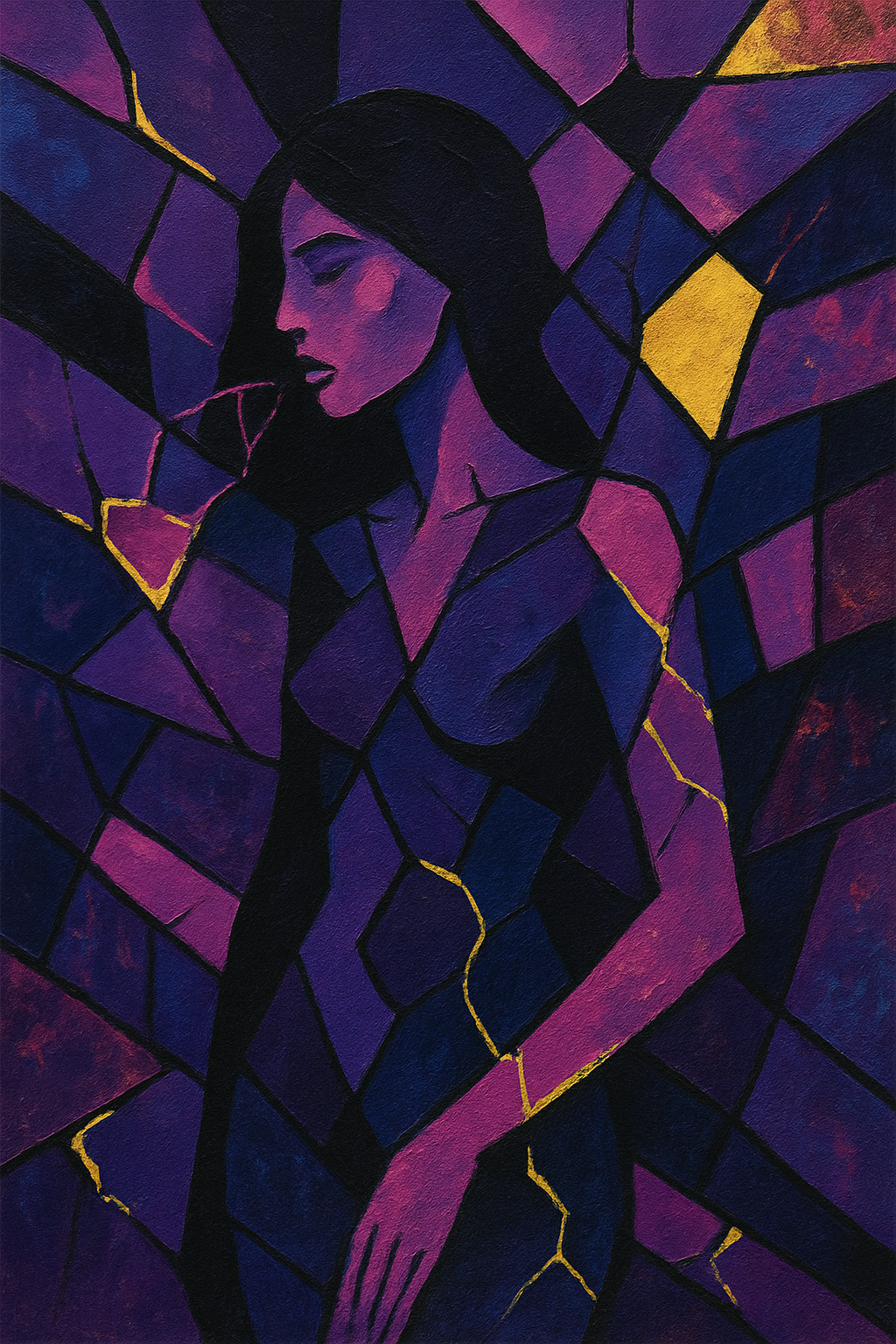
Breakdown of Form II – Woman in Stained Glass
Breakdown of Form II – Woman in Stained Glass
Abstrakcja
Malarstwo współczesne
Lead time
Lead time
⏳ Delivery time
The order processing time depends on: the production technique, the drying time of the paints, the size of the image and any hand-finishing and protection.
🖼️ Art print on canvas
-
High quality canvas printing :
- Canvas - synthetic canvas 260 g
- Natural Canvas - 260 g cotton canvas
- Stretching the canvas onto the frame
- Quality control and packaging
Total completion time: up to
🎨 Oil Giclée Reproduction (print + hand-finished)
-
Giclée print on canvas:
- Canvas premium - natural cotton canvas 360 g
- Pigment print drying
- Hand finishing: texturing and oil painting
- Paint drying (depending on layer thickness, medium type and format)
- Stretching the canvas onto the frame
- Quality control and packaging
Total turnaround time: 5–
🚚 Ready-made paintings – shipped within 24 hours
Our gallery has a special category called "Ready-Made Paintings" - these are works available immediately, already stretched on a frame or in a ready-made frame.
- They are 100% ready for immediate shipment
- Safe packaging in a reinforced cardboard box
Shipping takes place within: from the date of booking the order.
Image format: Reprodukcja Oil Giclée
Need a different size? Contact us.
Couldn't load pickup availability
1. Title
"Breakdown of Form II – Woman in Stained Glass"
2. Description of the image
"Breakdown of Form II – Woman in Stained Glass" is a visually and emotionally intense portrait of a female figure shattered into geometric fragments—as if part of a shattered stained glass window. Her face, delicate and pensive, blends into the chaos of sharp shapes and contrasts. The body is drawn with simple forms, with cracks crisscrossing them like scars—traces of tension that has not disappeared but has changed its structure. The whole resembles an abstract echo of emotion frozen in time—a statuesque calm immersed in light and fracture.
3. Technology
Oil on canvas. The painter used impasto and sharp contours to emphasize the rhythm of the form. Smooth color transitions are contrasted with sharp edges. Yellow lines imitating cracks run through the painting like a web of tension, uniting the fragments into a logical, yet fragile, whole.
4. Style
Modern Expressionism with influences from Cubism and stained glass. The composition evokes spirituality and inner drama. The woman's silhouette recalls a saintly figure from a Gothic church window—but here dismantled, transformed by contemporary anxieties.
5. Colors
Violets, indigos, and blacks dominate—cool, contemplative. In contrast, neon yellows and pinks emerge, piercing like light through cracked glass. This color scheme speaks of fragility and strength—of the tension between woundedness and the light that passes through it.
6. Invoice
Rich and varied. Fragments of the background and silhouettes appear to have varying depths—as if each form were a separate panel of glass. The surface is full of energy, with tiny cracks imitating emotional vibrations.
7. Inspiration
Inspiration comes from traditional stained glass and contemporary reflections on femininity, emotion, and the integrity of identity. It also echoes the philosophy of kintsugi—the Japanese art of bridging cracks with gold, which recognizes decay as an element of beauty and history.
8. Message and multidimensionality of interpretation
The painting speaks of transformation. That what breaks doesn't have to disappear—it can create a new structure. The woman here is not the victim of the break, but its bearer—a form that has passed through disintegration without losing its presence. The viewer is invited to ask: do we see pain, or the healing process?
9. Originality and authenticity
Original in its symbolism and use of visual language to convey emotion in an almost ritualistic manner. Authentic because it doesn't attempt idealization—it shows beauty in irregularity, strength in fragility, light in fractures.
✨ Sometimes the brightest light shines through what has been broken. ✨
Share