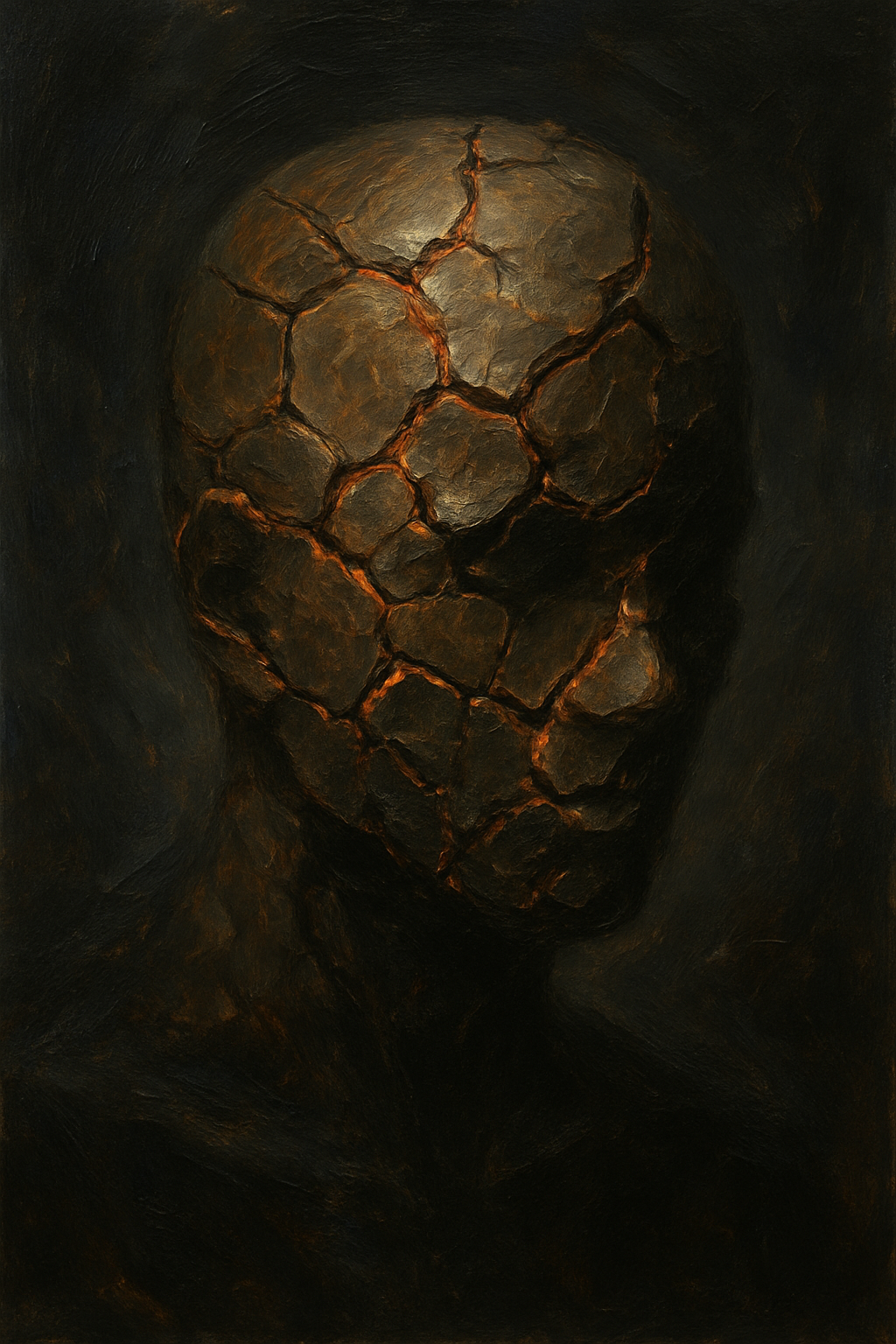
The face that wasn't allowed to be
The face that wasn't allowed to be
Realizm
Malarstwo współczesne and Portrety
Lead time
Lead time
⏳ Delivery time
The order processing time depends on: the production technique, the drying time of the paints, the size of the image and any hand-finishing and protection.
🖼️ Art print on canvas
-
High quality canvas printing :
- Canvas - synthetic canvas 260 g
- Natural Canvas - 260 g cotton canvas
- Stretching the canvas onto the frame
- Quality control and packaging
Total completion time: up to
🎨 Oil Giclée Reproduction (print + hand-finished)
-
Giclée print on canvas:
- Canvas premium - natural cotton canvas 360 g
- Pigment print drying
- Hand finishing: texturing and oil painting
- Paint drying (depending on layer thickness, medium type and format)
- Stretching the canvas onto the frame
- Quality control and packaging
Total turnaround time: 5–
🚚 Ready-made paintings – shipped within 24 hours
Our gallery has a special category called "Ready-Made Paintings" - these are works available immediately, already stretched on a frame or in a ready-made frame.
- They are 100% ready for immediate shipment
- Safe packaging in a reinforced cardboard box
Shipping takes place within: from the date of booking the order.
Image format: Reprodukcja Oil Giclée
Need a different size? Contact us.
Couldn't load pickup availability
1. Title
"The Face That Wasn't Allowed to Be - Fractured Identity"
2. Description of the image
The canvas is dominated by a fragment of a human head—but instead of facial features, we see cracks , as if the entire structure were made of fragile ceramic or clay. Where eyes, mouth, and nose should be, are crisscrossed by distinct crevices and scratches —irregular, sharp, reminiscent of natural cracks. The background—dark, muted—remains indifferent, like a wall that remembers nothing. The head is not wrapped—as in the original version—but broken from within. This is not control—it is a breakdown that has already occurred.
3. Technology
Impasto oil on canvas. Cracks created with a palette knife or a thick brush, the texture is rich, almost three-dimensional in places. The paint is applied densely, with a distinct gesture. Some areas of the head appear like fragments , separated by light or shadow, creating the impression of a fragmented yet still enduring whole .
4. Style
Abstract expressionism with a touch of structural symbolism. This is a portrait that depicts not a person but their disintegration within a system or psyche . It draws on the spirituality of Francisco Goya's work (the "black paintings" series) and contemporary post-traumatic explorations. The style is brutally honest.
5. Colors
Black and dark red are dominant, symbolizing pain, silence, and inner darkness. Ash, gray, and sometimes white appear in the cracks—not as light, but as dryness, coldness, and emotional exhaustion . The palette doesn't seek harmony—it builds anxiety and truth .
6. Invoice
It's this that builds the entire story: a heavy, fleshy, even sculptural texture. The head resembles an object found in ruins—as if it once belonged to someone who existed but was shattered too soon . The paint peels, breaks, and in places where it cracks, it opens like a scar.
7. Inspiration
Perhaps the inspiration lies in the violence of silence —social, familial, systemic. It's a portrait of someone who couldn't speak, couldn't be themselves. But it's also a portrait of a soul that began to crack from within , until it vanished from its own depths. It's also a universal experience—of being unnamed, unnoticed.
8. Message and interpretation
"Fractured Identity" is a painting that doesn't tell a story—it interrupts it . It's a visual form of a scream that can't happen. The painting says, "I couldn't be, so I broke." It's also a call to the viewer: can you look at someone who no longer knows who they were? Can you name someone without a face? This is a work that stays with you because it doesn't close the emotions—it leaves them open like a crack .
9. Originality and authenticity
Extremely authentic – because it doesn't try to embellish anything. Original in its use of fractures as a language of identity – not as aesthetics, but as truth. It's an image that doesn't impose itself. But if you enter its silence, you won't emerge the same .
✨ Sometimes a face that wasn't allowed to be—it doesn't disappear. It cracks. And you can read more in those cracks than in lips. ✨
Share