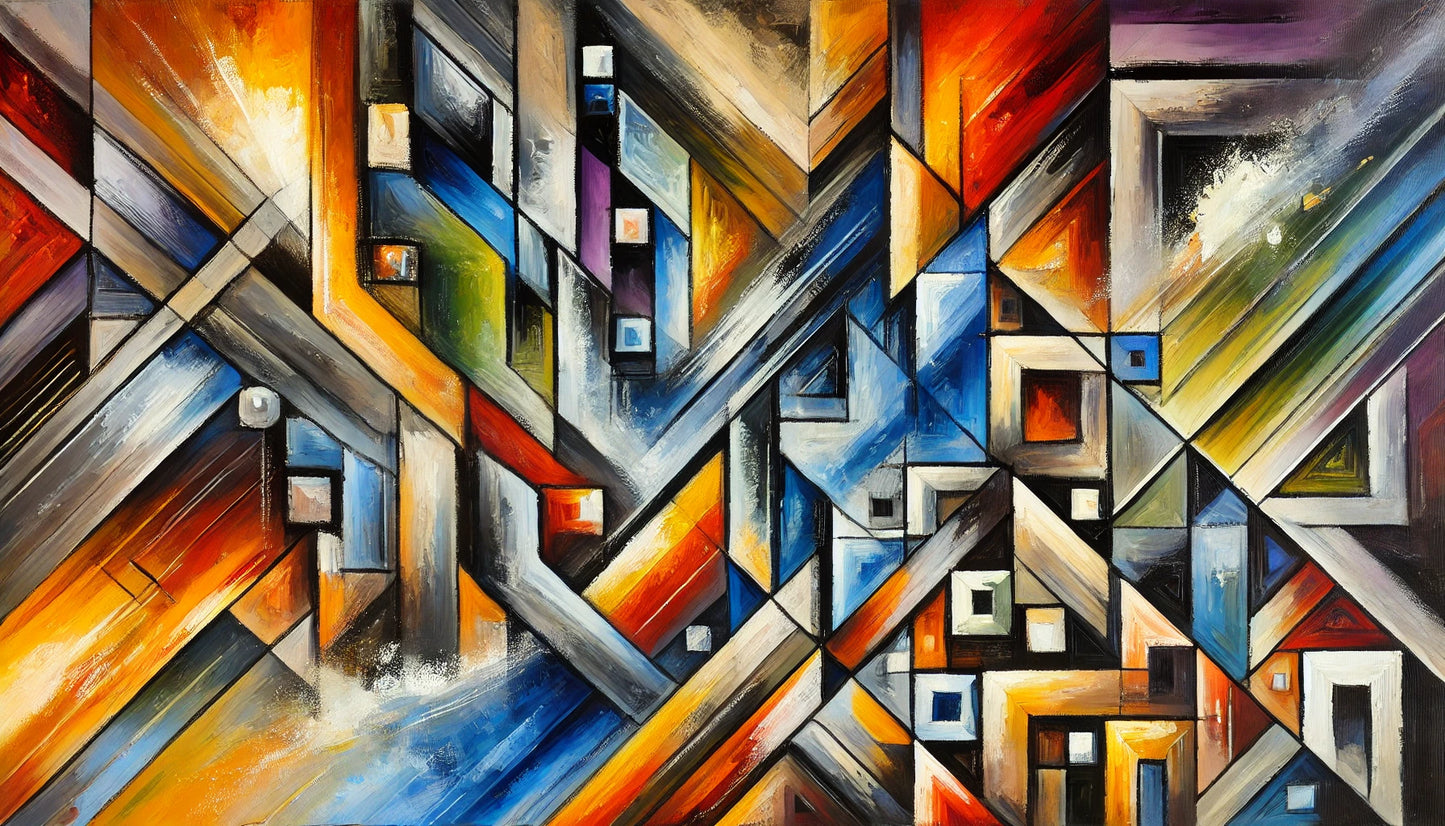
Fragments of Conflict – Rhythm of Disruption
Fragments of Conflict – Rhythm of Disruption
Abstrakcja and Kubizm
Historia i wojna
Lead time
Lead time
⏳ Delivery time
The order processing time depends on: the production technique, the drying time of the paints, the size of the image and any hand-finishing and protection.
🖼️ Art print on canvas
-
High quality canvas printing :
- Canvas - synthetic canvas 260 g
- Natural Canvas - 260 g cotton canvas
- Stretching the canvas onto the frame
- Quality control and packaging
Total completion time: up to
🎨 Oil Giclée Reproduction (print + hand-finished)
-
Giclée print on canvas:
- Canvas premium - natural cotton canvas 360 g
- Pigment print drying
- Hand finishing: texturing and oil painting
- Paint drying (depending on layer thickness, medium type and format)
- Stretching the canvas onto the frame
- Quality control and packaging
Total turnaround time: 5–
🚚 Ready-made paintings – shipped within 24 hours
Our gallery has a special category called "Ready-Made Paintings" - these are works available immediately, already stretched on a frame or in a ready-made frame.
- They are 100% ready for immediate shipment
- Safe packaging in a reinforced cardboard box
Shipping takes place within: from the date of booking the order.
Image format: Reprodukcja Oil Giclée
Need a different size? Contact us.
Couldn't load pickup availability
1. Title
"Fragments of Conflict – Rhythm of Disruption"
2. Description of the image
"Fragments of Conflict – Rhythm of Rip" is an abstract explosion of tension, in which colors clash like armies, and shapes shatter into geometric shards symbolizing social, ideological, and emotional fractures. This isn't an image of battle—it's an image of its aftermath. The lines are edgy, irregular, cutting through space like a scream. The colors don't seek harmony—they're here to speak of chaos, anxiety, and transformation. Each fragment echoes a larger phenomenon: fear, resistance, the reconstruction of identity.
3. Technology
Oil on canvas, with dynamic layers of impasto and energetic bold brushwork, which imbues the forms with brutality and strength. Fine brushwork and dry brush are used where drama gives way to analysis—in details that speak louder than the whole. The painting is painted with impulse and thought simultaneously—a composition of emotional precision.
4. Style
Abstract Expressionism with elements of structural Cubism. A style inspired by the work of Franz Kline , Kazimir Malevich , and also Picasso's Guernica —not as a formal carbon copy, but as an ideological inspiration. It is austere yet deeply humanistic.
5. Colors
The colors are intense and ruthless—bloody reds, contrasting blacks, cool blues, and yellows like warning lights. The colors are symbolic: red represents resistance, blue represents the coldness of distance, black represents emptiness. Their arrangement resembles a battlefield, but seen from within the depths of emotion.
6. Invoice
Rough, aggressive, and fluid. Thick layers of paint create a relief structure—as if the painting were burned and built from ashes. In some places, the texture becomes delicate, like a shadow or an echo—because even in chaos, memory and silence exist.
7. Inspiration
Conflicts—not just wartime conflicts, but social, personal, and political ones—are the inspiration. Painters such as Anselm Kiefer , Wojciech Fangor , and Robert Motherwell offer suggestions for speaking about tragedy without depicting it directly. Propaganda images transformed into their opposite—not exhorting, but questioning—also inspire.
8. Message and multidimensionality of interpretation
The painting doesn't tell a single story. It provokes reflection: about what breaks within us when everything falls apart. It's a story of transformation, which is painful—but necessary. Fragmentation becomes the language of truth here: no war leaves a person as they were.
9. Originality and authenticity
Original because of its form, which doesn't illustrate—but lives through. Authentic because it's emotionally honest, bold in color, conscious in structure. This is an image that needs no narrator—it is itself a cry, a gesture, a memory.
✨ When words fade, colors remain. And from them come stories that cannot be forgotten. ✨
Share